This is a quick public service announcement to let everyone know that The Crown in the Heather (The Bruce Trilogy: Book I) is now free as an e-book on Amazon.com, Amazon.co.uk, Barnes and Noble, Apple iTunes and Smashwords.
I'll report back later as to how having the first book in a series as perma-free affects sales of related books. So far it's going nicely. CITH got as high as #16 free overall in the Kindle store when E-Reader News Today picked it up. After just over a week, total downloads have exceeded 20,000.
So 'Hooray!' to new readers.
Meanwhile, I took a much needed month off from promotion, following my recent blog tour. I've also published five books in less than two years, so my brain (understandably) was getting a little scrambled. Since early June, I've read some phenomenally good books (which I'll list on a blog post shortly), cleared the brush out of the fence rows (I miss my sheep - they were good at that), weeded gardens, taken my dog to obedience class, gone on a lot of bike rides and am immersing myself in major revisions for an upcoming historical novel on Owain Glyndwr of Wales (more to come on that soon).
For those who would like to know some of what went on in Edward III's life in his waning years, I recommend Anne O'Brien's excellent historical novel: The King's Concubine: A Novel of Alice Perrers. For those not familiar with the events of the times, Alice Perrers was mistress to Edward III later in his life. O'Brien does a stupendous job of creating a sympathetic character out of Alice, who has been much maligned in history. I loved the narrative voice in this book and found it very compelling.
Here's wishing everyone a safe and fun summer!
Until later,
Gemi
Tuesday, July 24, 2012
Wednesday, June 6, 2012
Sometimes a Winner Finishes Last
Springfield News-Sun article:
WLS State Champ Lends a Helping Hand
Bellefontaine Examiner article:
Tigers’ Vogel wins title in 1,600, aids fallen runner in 3,200
Last week, our family of four piled into the car and spent the day at the Ohio High School State Track Meet, as we do every year. It was a little overcast, breezy and an unusually cool 70 degree day - a welcome change from the usual 90+ degrees when tens of thousands melt on the metal bleachers. Every year we get to see a few records go down. Luckily, since our kids graduated recently, we're still familiar with some of the athletes participating. This year was a special treat, though, because there was one of those great moments in life that I'll never forget.
Earlier in the day, Meghan Vogel of West Liberty Salem High School had won the Girls' Division III 1600 meter run in her first sub 5:00 minute performance ever, defeating a former state champ who she'd never beaten before that day. Humble and bubbling, she was beside herself with excitement afterwards. Later, she joined the entrants in the 3200 meter run, but by a few laps into the race it was apparent she'd expended her energy on the race of her life already and so she settled into the back of the field. The winner came across the line and one by one all the rest. Vogel was on the backstretch by then, in last place.
As Vogel came to the top of the homestretch, everyone in the stadium became focused on another runner, Arden McMath who, with less than 50 meters to go, stumbled, went down to the ground, got up and stumbled again. Fatigue had taken its toll. The officials rushed towards McMath, but then backed off. You see, if they had aided her in finishing, it was grounds for disqualification. So all they could do was wait and watch. As long as she was still moving, they were going to let her finish the race.
Behind her, Vogel closed the distance. McMath went down again. This time she didn't look like she was going to go on. Vogel stopped, lifted her up and helped her to her feet. McMath's arm slung over Vogel's shoulder, they walked step by step toward the finish line. The crowd came to its feet in applause. When the pair reached the line, Vogel let go of her and made sure that McMath stepped across the line first. Everyone glanced at the officials, waiting for the yellow flag to go up in the air, signalling a rule violation. It never did.
In the face of that selfless moment, the officials chose to publicly ignore a technicality and acknowledge the sportsmanship. I still get teary-eyed when I think of it. Vogel could have run past her and no one would have thought anything of it. The officials could have DQ'd both girls; they didn't.
It was a very noble moment on many fronts and I'm glad I was there to witness it.
Kind runner helps rival go the distance (The Columbus Dispatch)
Flotrack Video: Meghan Vogel stops to help fallen runner at 2012 Ohio State Meet
Flotrack Video: Interview with Meghan Vogel after her 1600 meter win
Until later,
Gemi
Monday, June 4, 2012
Celebrating a Milestone: 50,000 Kindle Books Sold
(My assistant Trim [lower right] taking a break.)
Two years ago when I decided to stop pursuing the traditional route of publication and independently publish, I had hopes of selling a few hundred books. Sure, every writer wants to be a bestselling author, but I figured I'd be happy if someone other than friends and family simply knew my work existed.
I'd long ago lost count of the number of rejections I've received, at first from agents and eventually from editors. When I initially put my debut book on Kindle, there were days I clicked on my KDP sales report page and didn't get a single sale. Sometimes that went on for most of a week. Great big goose eggs. Oh well, I tried.
Yet something kept me going: supportive family, a champion agent and fellow writers. Along the way, I had crit partners who were persistent in their encouragement, even when I didn't have confidence in myself, and who made suggestions in a helpful, positive way that made my writing better. I remember the phone call from a successful agent (OMGosh, someone was actually interested in my books!) that had me so excited I almost burst. I can't neglect to mention my two children who allowed me to ignore them so I could write and the husband who made sure that dinner was on the table when I was absorbed in my work.
And one day, along came my first fan mail. It was January of 2011. I'd been self-published for seven months. I thought surely this was just some kind soul taking pity on me and spreading random kindness. Now, I can glance up at the wall behind my desk (above) and see it papered with e-mails and FB posts and tweets from readers. Yes, real readers. I sure as heck don't know that many people! I'm still amazed that anyone would take the time to write to an author, least of all me.
Yesterday, my KDP sales report page ticked over with my 50,000th Kindle sale on Amazon. Honestly, it feels more than a little surreal.
Just in case you think that's something spectacular, here's a list of indie authors and their sales figures for April 2012: Top 100 Indie Authors. It's not a comprehensive list, as some indie authors are more public with their numbers than others, but Holy Smokes! It's amazing how well some self-published authors are doing. Here's another thread on Kindleboards listing authors with over 50,000 sales.
I'm taking a moment out to celebrate and say THANK YOU! to all the readers who made this milestone possible, as well those who provided moral support and shared their knowledge along the way. I am humbled and eternally grateful.
Success, however small or large, never happens without a little help from others. Whatever your dreams, wherever you're starting from, however far you have yet to go, remember - one step at a time, stay the path and (as Oprah used to say) surround yourself with angels. They're there if you look for them. I've been lucky enough to find more than a few along the way.
Until later,
Gemi
Friday, June 1, 2012
Author Rebecca Lochlann Talks About Ancient Volcanic Eruptions
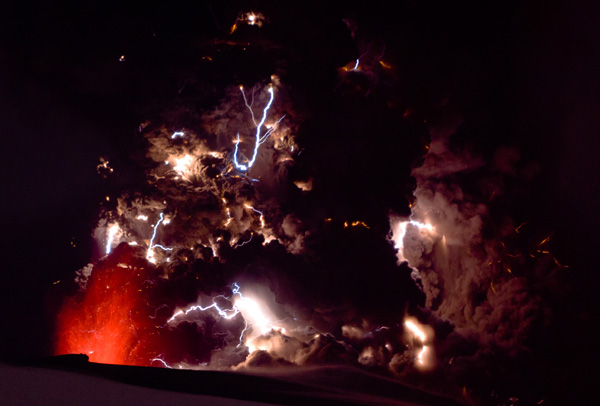
(I've long had a fascination for geologic events, particularly volcanic eruptions. The powerful forces behind these cataclysmic events often have far-reaching and long-lasting effects. They alter the earth, destroy life and even entire civilizations. Today, even though we still can't predict them, at least we understand what is going on beneath the earth's surface. Imagine living in an age when volcanoes were not only unpredictable, but mysterious entities. My talented author-friend Rebecca Lochlann deals with this in her newly released book, The Thinara King, which I highly recommend. I asked her to tell us some more about it. So, welcome, Rebecca!)
*****
The island in
the Mediterranean nowadays called Santorini has had many names
throughout the centuries. One of the oldest known names, and the one I use, is Callisti.
In ancient Greek, it means “The Most Beautiful,” and is alternately
spelled Kalliste.
Strongyle,
another of Santorini’s ancient names, meant, “The Round One.”
Thera, yet another
name long used for this volcanic island, can be translated as “Fear,” which, as
it turns out, was rather prophetic, as is the name of the central mountain,
rumored by some to be Alcmene,
meaning “Wrath of the Moon.”
Book number two of
my series, The Thinara King, jumps right in the middle of this famed volcanic eruption on
Callisti.
For many years,
until “super” volcanoes
were more clearly understood, this eruption was considered the worst in human
history. It was so enormous, so destructive, (categorized as a Plinian type
event) that it made the eruption of Tambora look like a tiny belch in the
earth. It would have made the Mt. Saint Helen’s eruption seem like nothing more
than a brief, sleeping baby’s gasp.
As scientists
become more adept at studying the effects of volcanoes, (and it’s impressive
how much they’ve learned about the Santorini volcano, even though it happened
so very long ago), they have conjectured that the repercussions of this event
went clear round the world, and probably affected the earth’s climate for many
years. From the depth of the ash on the sea floor, they have determined that
the worst damage done to Crete, a mere seventy miles away, was on the east
side. With improved methods and the study of more recent eruptions, there are
now conjectures that the pyroclastic flow (the most dangerous, murderous part
of an eruption) could very well have traveled on top of the water clear to
Crete. The idea that such a thing could happen is amazing, and is merely
theory, not proven. But that’s how huge this eruption was. Tsunamis of course
came along after, and devastated the entire coast; there are theories that the
tsunami which struck the northern coast managed to flow clear into the city of Knossos.
Charles Pellegrino, in his book Unearthing
Atlantis, says: “Within hours of the Theran upheaval of 1628 BC., death
rolled into southern Turkey on the tongue of a tsunami. Two peninsulas jutting
into the Aegean Sea confined the wave as if between the prongs of a mighty
tuning fork, building it higher and higher and ultimately funneling it thirty
miles inland. To penetrate so far, it had to be eight hundred feet tall when it
hit the shore.” (Pellegrino, C. Unearthing
Atlantis. New York: Avon, 1991)
One small bit of
positive news: recent theories state that most of the populace on Santorini
actually managed to escape the island before it blew into the heavens, leaving
nothing but a sliver (part of which is again beginning to send out ominous
messages). The volcano gave them warning, and they apparently heeded this
warning. Since Callisti is considered by many to be an outpost of Crete, it’s
no leap of logic to assume most of the refugees would go there, and that’s what
happens in my book.
As awful as this
eruption was, it did not end Cretan society. I have no doubt many died of the
aftereffects, like starvation, ash suffocation, etc. But the Cretan
civilization did eventually recover. Yes, these intrepid, hardy people managed
to survive and even thrive again after this indescribable event. But at some
point, later, the wondrous Bronze Age society of Crete (or Kaphtor) did
disappear. This segment of my series, (a trilogy) offers one possible reason
why, sets the starting point for the later books, and initiates a more familiar
history—one that might never have occurred had Crete survived, retaining its original
power and influence.
From everything Plato
said about Atlantis, there
is no doubt in my mind Thera is that fabled place.
Here is an
excerpt from deep within The Thinara
King.
Twilight
fell. Chrysaleon made a fire from dead olive branches. The last glow of
sunlight transformed gray clouds to scarlet and lavender, with hints of green
and yellow. Beneath this magnificence he constructed a pyramid of stones and
shot an unwary hawk from the sky. He burned its thighs in offering and knelt
beside his cairn, clenching the necklace in his fist.
“Poseidon,”
he said. “Walk with me. Lead me to Aridela. Make our bond unbreakable. Help me
slay Harpalycus and bring an end to the king-sacrifice.” He peered into the
heavens. “Make me this great-year-king, Horse Tamer, and I will present you
with the rich island of Crete. I will cover this land with temples and fill
each one with your image.”
A
sudden gust of wind shot a fan of sparks into the dimming indigo sky.
He
took it for the answer he wanted. Chrysaleon wrapped himself in the cloak Neoma
had given him. “Bring Aridela home,” she’d begged, clutching his arm. “I miss
her. I don’t think she even knows I’m alive.” The stone that struck her during
the worst of the Destruction had left a noticeable depression in her forehead,
like a large, out-of-place dimple, and ongoing headaches forced her to spend
time in darkened seclusion nearly every day.
He
stared at his fire, sleepless, thinking of Aridela, longing for her. A memory
crept before him, one he’d forgotten, from his time near death in the cell at
Labyrinthos.
In
his starved, thirsty mind, he’d experienced a vision of Menoetius transforming
into a black bull, the enormous bad-tempered kind Cretans used in their ring.
The beast gored him and as he lay gasping, his lifeblood seeping away, Aridela
came to stand beside the bull, resting her hand on his neck in an intimate
manner. She had looked down upon Chrysaleon without any emotion.
“No,”
he’d whispered, and he did so again now, his teeth and hands clenching as he
gazed into the cold night sky. “Menoetius won’t defeat me.”
He
fell asleep at last, but during the night’s blackest point, he was awakened by
the earth shuddering. Small creatures scurried; rocks scraped, rolled, and
tumbled. His horse shied and nickered. Farther away, he heard ominous, eerie
echoes as an avalanche of boulders crashed into one of Crete’s many precipitous
gorges.
He
stared into the night toward the mountains, aching to be among them.
I’m coming, Aridela. I will find
you.
*****
The Year-god’s Daughter: Book One of The Child of the Erinyes
The Thinara King: Book Two of The Child of the Erinyes
In the Moon of Asterion: The conclusion
of the Bronze Age trilogy (available by the end of 2012)
Website: http://rebeccalochlann.com
Amazon Rebecca
Lochlann page: http://tinyurl.com/73u82kg
Blog and
excerpts: http://rebsthoughtsandinspirations.blogspot.com/
Thanks for visiting with us, Rebecca!
Happy reading,
Gemi
Monday, May 28, 2012
Virtual Book Tour May 28 - June 15: The King Must Die
Join me as I tour the blogosphere in a virtual book tour for The King Must Die (a novel of Edward III). For those interested in the research that went into this book and Isabeau, the writing process, a smattering of my writerly quirks and the occasional deep pondering from yours truly, this is your chance to stalk... I mean, learn more. ;-)
Did I mention there's a $25 Amazon gift certificate available to one random commenter during the tour?
Here are the stops along the way (I'll return every couple of days to update the exact links as they occur):
May 28th - Lisa Haselton's Reviews and Interviews
May 29th - A Chick Who Reads (interview) (review)
May 30th - Sexy Adventures, Passionate Tales (Author Isabel Roman)
May 31st - The Literary Forest
June 1st - Hope. Dreams. Life... Love (Author Elaine Cantrell)
June 4th - Melissa Keir's Blog - Musings from Michigan (My Favorite Vacation Destination: Scotland)
June 5th - Sandra's Blog (Author Sandra Cox) (Medieval Clothing)
June 6th - Sugarbeat's Books
June 7th - Vintage Vonnie (Author Vonnie Davis)
June 8th - Welcome to My World of Dreams
June 11th - Cathie Dunn writes . . .
June 12th - Christine Young - Romance Writer
June 13th - The True Book Addict
June 14th - It's Raining Books
June 15th - Books Are Magic
Happy reading,
Gemi
Thursday, May 24, 2012
Where To Find Good, Affordable E-Books
Today, The Crown in the Heather is being featured at Kindle Books for a Buck or Less. It's still on sale at a discount rate of 99 cents on Amazon Kindle.
Some other great sites where you can find good, affordable e-books are:
Pixel of Ink
Kindle Nation Daily
Daily Cheap Reads
Best Ebook Reader Lovers
The Frugal eReader
You can also follow most of these sites on Facebook. I do!
Happy reading,
Gemi
Saturday, May 5, 2012
Sarah Woodbury Talks About Time Travel to Medieval Wales
Today, my guest is novelist Sarah Woodbury, who writes historical fiction, mysteries and time travel set in medieval Wales. I've asked Sarah to talk about why she decided to write historical fiction and to give us an introduction to her After Cilmeri series, which begins with Daughter of Time. I recently finished this book (which is FREE, btw). You know it's a good book when you get to the end and realize you really care about the characters!
(Meanwhile, you can find me over at Sarah's blog as I discuss Exploring the Lives of Real Historical Figures.)
*****
Writing Historical Fiction
Back in high school, I overheard two girls lamenting how awful their classes were and how they ‘hated’ history. Since I was hiding in a bathroom stall at the time, I didn’t give voice to my horror at their sentiment, but it has stuck with me in the thirty years since. How could they ‘hate’ history?
Unfortunately, all too easily if by ‘history’ they meant the memorization of facts and dates that had little or no bearing on their lives. Why did they care what year the Civil War began? Or who was the tenth president of the United States? Or what happened in the fertile crescent of Mesopotamia (though knowing might clarify our wars in the Middle East today, but that’s a different topic).
That’s not what history is about. History is about people. It’s the anthropology of the past. It’s about finding out why people did what they did; what they cared about; and the nitty gritty of how they lived and died.
I strongly believe with Donna Tartt that: "The first duty of the novelist is to entertain. It is a moral duty. People who read your books are sick, sad, traveling, in the hospital waiting room while someone is dying. Books are written by the alone for the alone."
But along with entertaining, what I love about historical fiction is that it can bring history to life.
Because I have an academic background, research comes naturally to me. When I decide on a topic for a new novel, I first spend a few weeks exploring the history, culture, and geography of that time period. It is very important to me to know as much as I can about the history of the time, even if I end up changing aspects of it to suit my novel. At the same time, I try to keep events as historically accurate as possible.
When writing about dark age and medieval Wales, however, there is so much we don’t know that sifting through the data to find out what ‘really’ happened is often next to impossible. Many records were destroyed—deliberately for the most part—in the years after Edward I conquered Wales, but other records were lost to time, thrown away in ignorance, were never written down, or were lost when Henry VIII abolished the monasteries.
For the novelist, while knowing the birth date of the last Prince of Wales, Llywelyn ap Gruffydd, would be helpful, it does leave enormous scope for fiction.
And that’s what makes historical fiction or historical fantasy so fun to write. The impetus behind my After Cilmeri series is a dream I had in which I drove my mini-van through a time warp into medieval Wales. I was fascinated by the idea of what it would be like for a modern person to live there. Would life in the Middle Ages chew me up and spit me out? How would I survive without hot showers, antibiotics, and coffee?
In the end, the dream was only the initial kernel of the story, which evolved into a four book series, plus a novella and has occupied my creative life for much of the last five years.
A shelf (or Kindle)-full of good historical fiction can be entertaining, but also gives us a window to the past and allows us to lose ourselves in other times and lives. And ensures that we call can say: I love history!
*****
Thanks, Sarah! Here are some links to Sarah's pages and books:
Sarah Woodbury's web page
Sarah on Twitter
Sarah on Facebook
Sarah's books on:
Amazon and Amazon UK
Smashwords
Barnes and Noble
Apple
Subscribe to:
Posts (Atom)