Sunday, May 12, 2013

Remembering Mom


Memories of our loved ones never truly fade away. They wait and hide in unexpected places: in the flicker of tail fins in a school of neon tetras, in the smudge of jam on your son’s chin as you wet your thumb and try to rub it off, in the smell of coconut-scented tanning lotion, or Ivory soap, or baked apple dumplings . . . or in a 70’s Carol King song on the radio. Little things that yank you back to a time when you never imagined being without your mother.

Six years ago, I lost my mom to cancer. During her prolonged battle, I accompanied her to visits with the oncologist and in her final days helped care for her at home. I play those months over and over in my head. She got worse, then better, then worse again. Every once in awhile, I’d visit her and she’d seem almost normal: tired and a little weak, yes, but in good spirits. There were also days when the hope in her eyes had dimmed, when her voice was a raspy whisper, when she couldn’t hold down solid food. Little by little, I saw her slipping away, becoming more ghost-like.

An experience like that is not something you mentally prepare for while growing up. Often, I question whether I did everything I could have for her. Nearly every day, I was there with her, helping with the most normal of tasks that she could no longer do by herself, like changing her clothes or lifting a spoon to her mouth to slurp Jell-O. Things that she used to do for me when I was an infant. I did what I could, although it hardly seemed like enough, but one question still haunts me—should I have actually said that I loved her while I had the chance? You always think you’re going to have one more day with that person. Then suddenly, you don’t.

We were not a family that hugged or tossed around words of gratitude or pride. Displays of affection, whether verbal or physical, made us very uncomfortable. If we said anything at all, it was in a birthday or get-well card—someone else’s borrowed words. To this day, when holiday gatherings among my husband’s family are breaking up and they all rush toward each other, arms flung wide, I retreat toward the door and hide behind someone. When someone does ensnare me in their embrace, it feels ‘odd’ to me, like my ribs are being crushed and the air sucked out of my lungs. I can hug my dogs, my kids and my husband, but beyond that my comfort zone is violated.

Still, even though I can never recall my mom saying the words ‘I love you’ out loud or wrapping her arms around me for longer than a second, I always knew that she loved me. I knew because being with her made the world a better place, more beautiful, and life more cheerful and more worth living. Many, many times, I watched her tend to her garden, tugging dandelions from between the tulips barehanded, dirt smeared on her knees and packed under her fingernails. And I crouched beside her, asking the names of the flowers (peonies, hollyhocks, bearded irises, grape hyacinths) and pointing out the millipedes as they scattered through the upturned earth. 

I remember Mom using up her sick days from her job to stay home with me when I had a fever, yet trudging off to work when a sinus headache hammered at her cheekbones and congestion made a good night’s sleep impossible. I remember her taking us kids shopping for school clothes, even when her winter coat was tatty and ten years out-of-date. I remember her swapping her hours with co-workers just so she could come to my band concerts or track meets, then putting in overtime so there was money in the bank later to help send us to college.

Each spring when the lilacs bloom now and send their perfume wafting on the breeze, I walk around my yard to see which of the rose bushes have survived the winter. I used to invite Mom to my house just to see the flowers, because I knew she’d appreciate the work that went into nurturing each plant. I can’t do that anymore, not with her, but I know she is there in every leaf bud and daisy petal and lady bug.

What amazed me most is that my mom still had such a generous and caring heart while choosing to remain in a bad marriage for over fifty years. Arguments between my parents and slammed doors were a regular occurrence in our house. I escaped from it every chance I got. So did she. I half think the reason she made such an effort to be with us kids—whether outside, at the store or standing in line for the Ferris wheel at the county fair—was to take her away from the spiteful words that my father regularly volleyed at her.
The day before she died, the last time I saw her, as she lay on her hospital bed in the middle of the living room, my father yelled at her to quit her “bellyaching”. He was stressed by caring for a wife with failing health, I understood that. But who, with an ounce of compassion in his soul, would say something like that to a dear one in mortal pain, especially someone who had stuck with him for five decades? 

When he left the room, she mumbled something. I took her hand, bent closer, and asked her to say it again. She said, “I don’t want to survive.”

Squeezing her hand, I fought back the tears and said, “I know, Mom. I understand. It’s okay. It’s really okay.” I saw then, in her eyes, not pain but peace, acceptance . . . and love. I felt it through my fingers, sensed it flowing from her, to me, and back again, continuous, strong, eternal.

The next morning, I got the call. The one that declared I would never again hear her voice, share Thanksgiving dinner with her, wander through the mall beside her, all sense of time lost. She would not be there to phone when there was good news to share or reassurance needed, when the kids graduated high school or when the first crocuses poked their purple and white petals through last autumn’s mat of fallen leaves.

At her funeral, I set aside the anger bubbling inside me over being robbed of her presence. Instead, I made myself think of the good times, the simple moments, the little pleasures all around me that she had introduced me to. Then, I stood beside her coffin and whispered, “Love you, Mom.”

And now, when I kneel in the dirt and grasp the roots of the dandelion that has invaded my flower bed, when I sprinkle flakes into the fish tank, or when I am standing in the freezing rain to watch my kids at a track meet—I realize I have become my mother in so many ways. And I’m glad.

Until later,
Gemi

(The above essay appears in the Indie Chicks Anthology Memories of Mom.)

Monday, April 22, 2013

Writing the chapters of life


A small but significant event happened over the weekend that marked the end of one chapter in life and the beginning of another. While big events are easy to mark, even the smallest of changes can separate one chapter of life from another one.

For over a year, my husband has been telling me to cancel our YMCA family membership and either buy extra at-home exercise equipment or find a more up-to-date facility to join. Our local Y is often crowded on weekends with swim meets, the roof leaks constantly and the equipment has seen better days. Even though buying our own elliptical would have saved in gas and membership fees, the problem with machines is that they break. Our treadmill has needed repair twice and both times were during the winter, when we were unable to run outside. So it sat there waiting for the belt to get fixed while we just . . . sat. If it wasn't for the Y, I wouldn't have had a place to run.

Working at home all day, sometimes I just need to go out and see other people. Doing so eases the feelings of isolation, especially when it's cold, dark and dreary outside and I haven't been within ten feet of another human being besides my husband for days.  Now that both kids are in college away from home, this is even more true. And that was the core of the reason I couldn't let go.

You see, what I was having a hard time with was the fact that I had so many memories of my kids growing up attached to the Y. It's where my daughter took her first dance class. She was only two, but I signed her up for Intro. to Dance at the Y, anyway. All she did was twirl around in her tutu, ignoring the teacher and disrupting the other little girls with her chatter about how pretty her outfit was. She wasn't ready just then, but a couple years later she started classes at another studio in town and danced until she was sixteen. During those later years, while she was busy at pointe, jazz and tap class, I would dash off to the Y and do a workout. The Y is right across the street from the performing arts center where many of their shows were held. I can't drive by that place and not think of her in her satin pointe shoes, wearing her white lace tutu and glitter makeup while she danced to Tchaikovsky and snowflakes drifted down from the rafters.

The Y was also where my kids learned to swim. I'd signed both kids up for Pollywog class. At the end of the session, they took a swimming test to determine if they were ready for the next level. My daughter's assessment recommended she move up to Guppy. But my son's, who is a year younger, suggested he stay in Pollywog. Since the classes were on different days and I didn't want to make an extra trip downtown, I told them if they wanted to keep swimming, then they could both go to Pollywog again. My son was mad and wrote me the note above, stating in no uncertain terms that he was ready for the next level. He was six and had taught himself to read and write. Thus the phonetic spelling of the word "sien" (sign).

This weekend my husband and I were running errands when we noticed tons of people streaming in to the new Planet Fitness in town. On impulse, we stopped in to have a look. Fifteen minutes later we signed on the dotted line. Everything is brand spanking new, it's close to where we shop and costs less than the Y. We then drove downtown, where I cancelled our Y membership.

Tears welled up in my eyes as I walked out of the Y. It may have smelled like moldy ceiling tiles, been clogged with goggle-wearing little swimmers, and had squeaky equipment, but dang it, the place had MEMORIES. The problem was that I wasn't building any new memories - those little moments in life that matter - to replace them with. Being there only made me feel melancholy.

I will miss it, terribly. But there are times in life when you have to move on and start something new. It's good to shift gears at certain points, to be excited about new avenues. When we're young, we're always so ready for new adventures. But as we get older, if we stop challenging ourselves, stop seeking out the novel, we cease to learn and grow. I don't ever want to get that way.Time to write a new chapter in life...

Until later,
Gemi


Tuesday, April 16, 2013

What to read next (April, 2013 - Part II)


I wasn't even done with the last post before I realized I've been reading a LOT this winter and just had too many good books that I wanted to share to fit all in one post, so here's a few more:


1) Exiles in Time, by Sarah Woodbury

"Two years in Afghanistan; four years working for MI-5, the British security service; and the death of both of his parents from cancer. At the age of thirty-four, Callum thought he'd experienced the worst that life could throw at him. That is, until his boss ordered him to open a buried file on his desk and to take it seriously. His new assignment: to detain and question a pregnant woman and her ailing husband--and if need be, to stop them from returning to medieval Wales."

This is the latest installment in Woodbury's popular After Cilmeri time travel series - and in my estimation, it's the best one yet. In this book, Woodbury departs from the Welsh setting of earlier books and takes us to late 13th century Scotland. This is alternative history with a dose of romance, so events may unfold a little differently from the history books, but that only makes it all the more interesting.

I don't think you necessarily need to have read the previous books to be able to follow this story, but just in case you want to start at the beginning, the prequel to the series, Daughter of Time, is permanently free!


2) The Charter, by Gillian Hamer

 "Sarah Morton hopes dicovering the truth about the 1859 shipwreck of the Royal Charter will silence the demons of her past. But, tormented by visions and threats on her life, Sarah fears the ship may claim her as its final victim.

Set along the dramatic and dangerous Anglesey coastline, The Charter is a story of greed and forgiveness -- when the treasures of the past evoke the crimes of today."


Great suspense with a historical element, The Charter will immerse you in Welsh surroundings.


3) Dust, by Arthur Slade

"Imagine a depression-era town where it hasn’t rained for years. A pale rainmaker with other-worldly eyes brings rain to the countryside and mesmerizes the townspeople, but the children begin to disappear one by one. Only young Robert Steelgate is able to resist the rainmaker’s spell and begin the struggle to discover what has happened to his missing brother and the other children."

I would so love to see this as a movie! Dust is a Teen Horror novel - scary and dark, but not graphic.


4) One Week Girlfriend, by Monica Murphy

"Temporary. That one single word best describes my life these last few years. I'm working at a temporary job until I can finally break free. I'm my little brother's temporary mother since our mom doesn't give a crap about either of us. And I'm that temporary girl all the guys want to get with because I give it up so easily. According to the rumors, at least.

But now I'm the temporary girlfriend of Drew Callahan.."


A recently bestselling New Adult Contemporary Romance, One Week Girlfriend has an unexpected twist at the end. Sometimes the guys in the New Adult category are so much the 'bad boy' that it can be hard to find them likeable, but for me that wasn't the case with this story. Drew Callahan carries a dark secret, yes, but he's honestly a good guy.

5) The Dog That Talked to God, by Jim Kraus

"Recently widowed Mary Fassler has no choice except to believe Rufus, the miniature schnauzer, who claims to speak to the Divine. The question is:  Will Mary follow the dog's advice, and leave everything she knows and loves?  Is this at the urging of God?  Or is itsomething else? Will Mary risk it all or ignore the urgings of her own heart?"

I actually read this last summer, but was going through my Kindle and remembered liking this one a lot. What really surprised me was that when I was reading this, I stopped at some point to see who the author was again and had a hard time believing it was written by a guy. The main character is Mary, a bereaved mother and wife, who's learning to cope with loss and find peace and maybe love again.  Rufus poses the simplest, yet most heart-searching questions to Mary.

If you love animal stories, this is a wonderful read for a stormy day. Kraus has a new book out, The Cat That God Sent.


Happy reading,
Gemi

Saturday, April 13, 2013

What to read next (April 2013)


It's time for another installment of 'What to read next'! Today, I've included recommendations for New Adult, Literary Fiction, Womens Fiction, Historical Fiction/Fantasy, and SciFi. Take your pick!


1) My Deliberate Mistake, by Claire Svendsen

"Drowning was supposed to fix everything. We were meant to die together. That's not what happened.

Ana Turner goes through shrinks like normal girls run through boyfriends. They'd probably be able to help her if she ever told them what was actually wrong..."


Svendsen shines in her debut novel My Deliberate Mistake, a New Adult psychological thriller. (If you're wondering what 'New Adult' means, it's like YA but grown-up, with more adult themes and situations.) This is a refreshingly original story about a girl on the edge who probably needs her meds to keep her mental health in balance. But what Svendsen does so artfully is keep you guessing as to what is real and what might only be in Ana Turner's head. This is a really fast-paced read with twists and turns. Brilliantly written. If you like something edgy and delve into this, you'll see why I'm so excited about discovering this new author.


2)  Don't Let Me Go, by Catherine Ryan Hyde

"The heart-breaking, funny, and life-affirming story of a building full of loners and misfits who come together to help a little girl survive—and thrive—against all odds."
 

 This is the second of Hyde's books I've read and as with When You Were Older, this one tugged at my emotions and made me feel for the characters. Don't Let Me Go is another great work of literary fiction about a bunch of misfits and loners in an apartment complex on the bad side of town who band together to care for a young girl in need. These people don't want to get involved, yet they can't not help. Gradually, they all draw closer together. At the core of the story is young Grace, who talks a little too loudly and says what's on her mind, and Billy, a former performer who shares his love of dance with Grace and in doing so takes steps towards overcoming his phobia.


3) A Scattered Life, by Karen McQuestion

"Free-spirit Skyla Plinka has found the love and stability she always wanted in her reliable husband Thomas. Settling into her new family and roles as wife and mother, life in rural Wisconsin is satisfying, but can’t seem to quell Skyla’s growing sense of restlessness. Her only reprieve is her growing friendship with neighbor Roxanne, who has five kids (and counting) and a life in constant disarray – but also a life filled with laughter and love." 


I enjoyed McQuestion's The Long Way Home so much I went in search of another book from her. This is a gentler read, but with heartfelt emotions.

Sometimes our friendships develop with the most unlikely people. Unlike Skyla's orderly almost mundane life, her new neighbor Roxanne's is full of chaos, but abundant with joy. A meddling mother-in-law threatens to upset Skyla's relationship with her new best friend. A poignant ending.


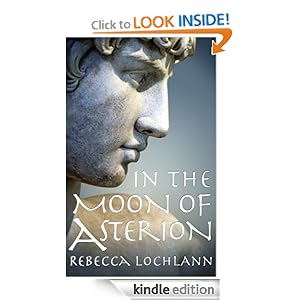
4) In the Moon of Asterion, by Rebecca Lochlann

"There is a beast in the labyrinth... a monster. The people say he is both man and bull; they call him Asterion.

Of all Crete's citizens, only two dare enter his lair. One bears his child. The other sees the Goddess in his eyes. Terrifying yet compelling, the beast offers Crete's only hope for redemption."


In the Moon of Asterion is the third book in Lochlann's Child of the Erinyes series (it's currently on sale for the introductory price of 99 cents, along with the first book The Year-god's Daughter). Lochlann again weaves myth and history in this epic tale filled with ancient gods and goddesses, prophecies, heroic men and strong women, in particular Queen Aridela who must lead her people from ruin to rebuild their homeland and rise again as the power they once were.

Lochlann is a true wordsmith who builds a detailed world on the pages. Venture back to ancient Crete with In the Moon of Asterion.


5) Shift Omnibus Edition (Shift 1-3), by Hugh Howey

"In 2007, the Center for Automation in Nanobiotech (CAN) outlined the hardware and software platform that would one day allow robots smaller than human cells to make medical diagnoses, conduct repairs, and even self-propagate.

In the same year, the CBS network re-aired a program about the effects of propranolol on sufferers of extreme trauma. A simple pill, it had been discovered, could wipe out the memory of any traumatic event.

At almost the same moment in humanity’s broad history, mankind had discovered the means for bringing about its utter downfall. And the ability to forget it ever happened."


 This is the prequel series to Howey's breakout Wool Omnibus. If you haven't heard about Wool yet, you're missing out. Even if you don't normally read Science Fiction, give these books a try. They're about people, expertly crafted by a truly talented storyteller.

Happy reading,
Gemi

Sunday, March 24, 2013

E-books now available at Apple, Kobo, B&N


I'm happy to announce the Uneasy Lies the Crown, A Novel of Owain Glyndwr is now available on iTunes, Nook and Kobo!

A few weeks ago I decided to switch distributors for all of my e-books to Draft2Digital. The transition went very smoothly. A couple of minor hiccups were immediately addressed by D2D's excellent support team and fixed within a day each. I can now view my sales at Apple, Kobo and Barnes & Noble as the occur daily, instead of waiting weeks (months, actually) to see how many I've sold and helps me keep my records organized.

The only downside is that not all of the retailers have made the connection that these are still the same books, even though the books still have the same ISBN (identification) number. So I'm posting my author pages for those retailers here to help readers find the books.

AUTHOR PAGES:

Apple (iTunes)

Barnes & Noble (Nook)

Kobo

Sony

Amazon.com

Amazon.co.uk

Until later,
Gemi

Tuesday, March 19, 2013

What's next?

A lot of times I get asked the question: "When will your next book be out?" Until recently, I've always had a good estimate for a publication date and a solid book in the pipeline. While it seems like I can churn out a 100,000 word thoroughly researched historical novel in six months (having published six of them in less than three years), the reality is that it took me FIFTEEN YEARS to research, outline, write, re-write, re-re-write and finally publish those six books.

Yes, 15 years. And each one was the equivalent of writing a graduate thesis (I know, because I've done that).

When my kids were younger, I decided one day after seeing the movie Braveheart that I wanted to write an epic historical novel. Well, that one book turned into three and I just kept writing. In between running the kidsters to dance classes, soccer games, track meets and band concerts - not to mention rehabbing two houses and raising the occasional litter of Australian Shepherd puppies - immersing myself in that long ago world was a glorious diversion. I was drawn there. I reveled in it. I felt a part of it.

Now, the kids are gone and I have the house to myself. You might think all this free time would turn me into a writing machine, but I've since figured out that it's living a full life that gives you reason to write. These days, when someone asks me,  "When will your next book be out?, my answer is: "I don't know."

I've been doing some intense navel-gazing the last few months. I started a time travel historical romance, got 40,000 words into it and stalled at the historical section. This isn't so much 'writer's block' as it is just feeling pulled in another direction. Honestly, I'm not sure when  I'll return to writing the research-intense biographical type of historical I'm known for, the main reason being the length of time it takes to actually (and properly) write such a book.

The other reason is simply that I want to explore issues that everyday people can relate to - love, life, loss and hope - without the restrictions imposed by writing in another time period. While the wall behind my desk is covered with letters from readers saying how much they enjoyed my historical fiction, I also know there's a large portion of the population that doesn't read the genre. I feel like there are things I have to say, experiences I want to share, and there are soooo many people I have yet to reach.

Meanwhile, I've been cleaning out the basement, running on the treadmill, thinking about a part-time job, purging filing cabinets and kitchen cupboards, and patiently waiting for spring to arrive so I can tidy up the garden while I ponder what I'll write next. Or whether I'll finally use that college degree and return to teaching and coaching.

A few days ago I wrote the opening to a new story. It's about a dog and the way she enters the lives of several people at just the right time (think A Dog's Purpose or The Art of Racing in the Rain). It was freeing. I'm excited. And it's all unfolding clearly in my imagination. With 25 years of experience training and raising dogs, I have a LOT of real-life stories I can work into the pages of a fiction book.

Having been hung up at this fork in the road for too long now, I'm going to set my feet down on this path and follow it for awhile. I have a feeling that this is the right thing for me to do right now. I sincerely hope many of my readers will follow me. I think you'll be able to relate.

Thanks to all of you for staying with me so long. I'm simply amazed when someone tells me they've read all six of my books. (Where do you find the time?) I really do have the best readers in the world!

Until later,
Gemi

Monday, February 4, 2013

The King Arthur Conspiracy by Simon Andrew Stirling

The greatest benefit of the years I spent on the writing site Authonomy were the talented writers I met during that time. One of those is Simon Andrew Stirling and I'm proud to introduce him here, along with his books, The King Arthur Conspiracy, How a Scottish Prince Became a Mythical Hero and Who Killed William Shakespeare? The Murderer, The Motive, The Means.

Simon writes non-fiction and does it in a narrative style that brings to mind those dramatic voice-overs for movie trailers that grab your attention. He's also not afraid to tackle some of the great questions of history and levy what are not only strong arguments, but which sometimes break with tradition and make very bold statements. Rest assured, his are very scholarly works, backed up by solid resources.

Simon was generous enough to stop by and do a little Q & A for me. As you can see, he really has devoted his life to these subjects:
*****


1) What is the title and genre of your current work and what's it about?

"Who Killed William Shakespeare? The Murderer, The Motive, The Means".  As with my previous publication, "The King Arthur Conspiracy", it was my publisher who came up with this title. All I did was alter three indefinite articles to three definite ones.  Genre-wise, it's historical non-fiction, with some literary criticism and a fair bit of investigative research thrown in.

At one stage I was contemplating a trilogy based on the life of William Shakespeare.  A major turning point in his life seems to have been the events surrounding the notorious Gunpowder Plot - allegedly, an attempt by Catholic militants to blow up the King and his Parliament in 1605 - and this would have formed one third of the trilogy.  Another part would have been taken up with the end of his career, his retirement from the stage, and the strange circumstances surrounding his death.  Finally, to complete the circle, as it were, I'd planned to cover Shakespeare's early life, which would put the rest into context.

In the end, though, I chose to focus on the end of Shakespeare's days but to incorporate much of the remaining material into the book.  Thus, we start with a few chapters analysing his death.  Then we go through his life - and the terrifying events which were being played out in England, and the rest of Europe, at the time - until, in the final chapters, we catch up with his death again.  The last chapter looks at the life of his illegitimate son, who did much to keep the memory of Will Shakespeare alive through difficult times.

2) Where did you get the idea for it?

I grew up near Shakespeare's Stratford.  In fact, I knew Stratford-upon-Avon pretty well long before I knew much about William Shakespeare.  At an early age I got interested in acting, and at school I began to lean towards English Literature.  I studied Eng Lit, Drama and Gaelic Studies at university (briefly) and then went to drama school in London.  Little by little, Shakespeare became quite a big part of my life.  When I became a professional dramatist and scriptwriter, it struck me that it would be useful to know what made Shakespeare tick.  What was it about him that allowed him to become the greatest writer in the English language?  I was particularly intrigued by the character of Lady Macbeth - where did she come from?  So I started to research his life.

One thing that really helped was moving back to Shakespeare country.  Towards the end of the 1990s, I left the city and set up home in rural Worcestershire, where I met my wife Kim (who was born in Stratford).  A little later, my brother opened a shop in Stratford town centre, so I was spending more time there.  Also - and this is a big advantage - I knew a great deal about the area around Stratford.  Most Shakespeare biographers pop up from London, look around Stratford, and then go back.  I've spent most of my life in the areas which Shakespeare knew, and so I'm more aware of the local traditions which most commentators either ignore altogether or don't really understand.

3) How long did it take you to write it, from picking up your first research book to the final product?

Twenty-five years.  On and off, obviously.  But I know that I was 20 or so when I thought, "Wouldn't it be interesting to know what was going on in Shakespeare's life when he wrote "Macbeth", and to figure out where the character of Lady Macbeth came from - was it mid-life crisis? an unhappy love affair?"  That meant researching Shakespeare's life up until the age of 41 or 42, and researching the Gunpowder Plot alongside that.  That took about ten years, after which I began to look a bit more closely at the end of his life, and then his early years, and here I am, about to turn 46 and soon to publish the results of my quest.

Actually writing the manuscript for "Who Killed William Shakespeare?" took seven months.

4) Were there any special challenges with tackling a complex topic like this?  How does it differ from other books on Shakespeare?

One huge challenge (which complicated the first twenty years of research) was this: I found reading - and watching - Shakespeare's work utterly unenjoyable.  Hardly any of it made sense.  Reading or going to see a Shakespeare play, even at the Royal Shakespeare Theatre in Stratford, felt a bit like going to the dentist: unpleasant, and actually quite painful, but good for you in the long run.  It annoyed me intensely, though: here was the best writer, the national poet and an ongoing obsession of mine, and picking my way through his work was like trying to read a foreign language.

Actually, it wasn't quite like that.  I understood the words Shakespeare was using - I just couldn't figure out what he meant when he strung those words together.  The breakthrough came in the mid-2000s, when I started to ask myself: "Could Shakespeare have been Catholic?"  Looking back, it's amazing that I hadn't asked that question before - after all, Shakespeare was closely connected to the gunpowder plotters (who were Catholic), and his main patron grew up a Catholic, and his father had signed a Catholic will, and there are Catholic characters in many of Shakespeare's plays.  The problem, though, is that Catholicism was outlawed in Shakespeare's England.  Catholics were made to suffer horribly - even though, up until the time when Shakespeare's father was a boy, everybody in the country had been Catholic.

Researching Catholicism in Shakespeare's England, and the appalling suffering of the Catholics, proved to be the key.  Suddenly, plays which had meant nothing before became enormously meaningful.  They also became angry, painful, horrifying.  Most of all, though, I could read them for pleasure.  The old problem of not being able to understand and enjoy Shakespeare had gone.

But that's not all.  My access to the local traditions concerning Shakespeare had alerted me to a story, told by a Victorian clergyman, regarding Shakespeare's skull.  It's not where you might think it is.  I tracked down a journalist who had photographed the skull.  By painstakingly comparing the skull with various images of Shakespeare - including the most famous portraits, and a death mask, now in Germany, which many English Shakespeare experts refuse even to talk about - I realised that this was Shakespeare's skull.  The injuries inflicted are visible, not just on the skull but on the portraiture too.  Those injuries tell us how Shakespeare died.

So what makes this book different?  Well, it jettisons the old-fashioned nonsense (still pretty widespread) that Shakespeare was a humble, conforming, petit bourgeois Protestant - a man so self-effacing that he could die without anybody noticing - and puts his work squarely in the context of his times.  It draws on local traditions, unknown to or ignored by most of his biographers, and follows them up to reveal some startling facts about his life.  And it demonstrates, forensically, how he died, as well as explaining (to the best of my ability) why he was "stopped".

And it does all that in about 100,000 words - so the whole thing moves at a pretty good pace!

5) What other books do you have available and what are you working on next?

"The King Arthur Conspiracy: How a Scottish Prince became a Mythical Hero" was published last summer by The History Press.  That was my first major venture into publishing, and it took me about eight years to get from stumbling across a historical reference to the genuine Arthur to seeing my book in print.  I'm now following up on that research.  Late last year I put together an academic paper which focused on Arthur's last battle (in Scotland) and uncovered some new trails.  Moon Books have now offered me the chance to publish a chapter a month, online, of my work-in-progress, which I'm calling "The Grail: Relic of an Ancient Religion".  The first chapter should be up on the Moon Books website in a few weeks, and hopefully we'll keep publishing a monthly chapter online until the book is complete.  This will take about twelve months, and then the whole thing will be published in paperback by Moon Books.  This is a new way of working for me, and I'm already finding it a fascinating challenge.  Fortunately, I've got an artist who lives in the same village as me who's keen to create a unique image to go with each of the chapters, and there's a post-graduate student in New Mexico with whom I've been working on projects relating to the Grail legends for more than a year now, and he's great and providing useful and thought-provoking feedback.  So, all in all, I'm hopeful that "The Grail" will be a fine addition to my ongoing work on the origins of the legendary Arthur and the early history of Britain.  Better still, anyone who wants to will be able to follow the progress of the book, one chapter at a time, just by going to the Moon Books website (http://www.moon-books.net).  How about that?
*****


Simon Andrew Stirling blog:
http://www.artandwill.blogspot.co.uk/


Happy Reading,
Gemi